Wednesday, May 2, 2012

Expecting To Fly-11

Yikes! Spider bite month!

In early April, I was bitten by a spider. It was the same night of a happy occasion, the celebration of my son’s 21st birthday. I’ve been bitten by many things in my life: bugs, dogs, cats, horses, very young humans, and certainly other spiders, but never a spider bite like this. In this way, the life of an artist, one like myself that “navigates between disciplines,” is the same as that of other humans. We've all had experiences that have abruptly altered our plans and then we've had to deal with it.

In my case, I was bitten by a seemingly benign spider of gracefully simple design, like that of an XKE Jaguar of the early 60’s, the car acquired as part of the permanent collection of the Museum of Modern Art in New York. I remember studying the small but perfect oval of the spider’s little body. As an artist you appreciate shapes. He was brown with legs long in proportion to the torso. His entire circumference, including legs, was the size of a penny. At least this was what was going through my head as I walked to the bathroom to gather some toilet tissue to pad my hand as I picked him up and also to ease the pressure on the little guy as I placed him safely out the door. I’ve been doing this for years. Since the back doors were swollen from the rain, my left hand had to work hard to pull it open causing my right hand to release slightly allowing my little friend to wiggle free and crawl up and over my right thumb.

I noticed absolutely nothing at that time. It wasn’t until late that evening, after guests left the party, I’d cleaned the kitchen, mopped floors, said good night to my brother Carlos and his friend Kathleen who stayed over, that I decided to play my new guitar. I do that to settle down. I’m a picker, so my right hand was very busy as I played my own songs and those written by others. Working up the blood flow in my hand, I noticed that my thumb really hurt as I finished, but didn’t give it much thought. Then the night came and with it a pain that filled my hand with heat causing my thumb to expand to the volume of an internal organ. I didn’t sleep much. The next day the swelling and pain migrated to the rest of my hand. It was then I browsed the Internet viewing hundreds of spiders finally locating this nicely and humbly designed one. It was a brown recluse.

While the experience was and continues to be intense, and yes I did see a doctor, I was spared the part that disintegrates your skin cells. So, the bad news came with good news. Life is like that. The result, however, meant that the “waters” I’d been navigating as an artist between writing, drawing, and music had to temporarily pause. Not being able to have these creative outlets left me a bit lost.

It was especially hard not being able to write, but obviously my hand is now better. The thing about pain is that you don’t sleep much, so the day blends into night, early early morning, early morning, afternoon, and then it starts all over again. My twenty-four hour periods became an infinity loop. Sleep interruption and random extreme pain has other side effects. For example, I began to leave the house very little, didn’t engage many people other than events I either planned or that had a clear beginning and end. Food was not interesting and creative ideas could not be realized because my stamina was that of a nursing home patient. It was as if I was imploding into a little black hole of brown recluse migrating symptoms. I won’t go into what it does to your thought process, but it further fogged my faith in human development as a species. In other words, I was bummed.

What has prompted me write to you this particular morning is the inspiration derived from viewing a foreign film entitled Sidewalls and directed by Gustavo Taretto. Young urban protagonists Mariana and Martin are terrific and played buy actors Javier Drolas and Pilar López de Ayala. The screen writing is particularly genius in its descriptions, insight, detail, gait, voice, use of metaphor, and relevance to our contemporary lives. It mirrored so much of what I’d been experiencing as a borderline recluse. I enjoyed witnessing the various steps the protagonists took to resolve their sense of isolation. The movie Sidewalls is wise, humorous, witty, believable, and most importantly, made me laugh which made me elastic again. I’m elastic again!

I can guarantee that you’ll love the film. If you’ve felt knocked off your center or feeling alone when you are right next to other people, it will give you a shot in the arm and faith in the larger scheme of things. Yes, I’d been bitten by a brown recluse and had to deal with the pain and funky mess it made in my head, but this movie kicked me out of a thick fog. Check it out. It will grow in the open wedges of your senses and take sprout. It’s on Netflix. You’ll be left smiling and inspired.

In writing this I’ve also just realized something. In helping the spider outside instead of squishing it, I suffered for nearly a month. That was a puzzle to me. You see I have a belief system grounded in Indigenous knowledge that does not place humans in a hierarchy above other living beings, including spiders. This belief system also accepts that these other beings may have a message for you, and when obvious as this painful month-long spider experience, the significance of that message is elevated and not to be ignored. It took me a whole month to receive a simple but important message from this potent little messenger. He basically shared that when I go to help people, or little beings, I must make sure I protect myself a bit more from a “bite” that frightened folks can make as I help them with challenging transitions. Given my former and recent experiences with other humans, whether family or work, this nudge from my little spider friend was particularly relevant. Understanding this also allowed me to avoid developing a of fear spiders and to use more protective tissue padding when assisting them out of harms way. Even though my hand still feels some pain, I smiled once I figured this out.

Tonight I played the guitar after a long-month pause. Tomorrow I hope to hang some paper to begin another drawing. Below is the recent portrait I completed of my son Kanichi. It was a gift for his twenty-first birthday and finished the day before my spider visit. It will feel good to be up on the ladder again and working a new one.

Portrait of my son Kanichi (approx. 5 feet x 4.5 feet)

Message and inspiration were the quirky gifts in April. We'll see what May brings.

My best to you and don’t forget to check out the movie Sidewalls.
Lorraine


blog: lorrainegarcianakata.blogspot.com
web site: http://lorrainegn.com/

Copyright ©2010 Lorraine García-Nakata protected under U.S. and International Law. No part of this site maybe reproduced, stored in or introduced into a retrieval system, or transmitted, in any form, or by any means (electronic, mechanical, photocopying, recording, or otherwise), without prior written permission of the copyright owner and artist, Lorraine García-Nakata/Lorraine García. This includes all rights now in existence or which may hereafter come into existence, including but not limited to authorship, documentation, lectures, or any other creation or presentation by Lorraine García-Nakata/Lorraine García in any artistic medium, print, audio, electronic, video, CD ROM, photographic, digital, film, and any other medium.

Tuesday, April 3, 2012

Expecting To Fly 10

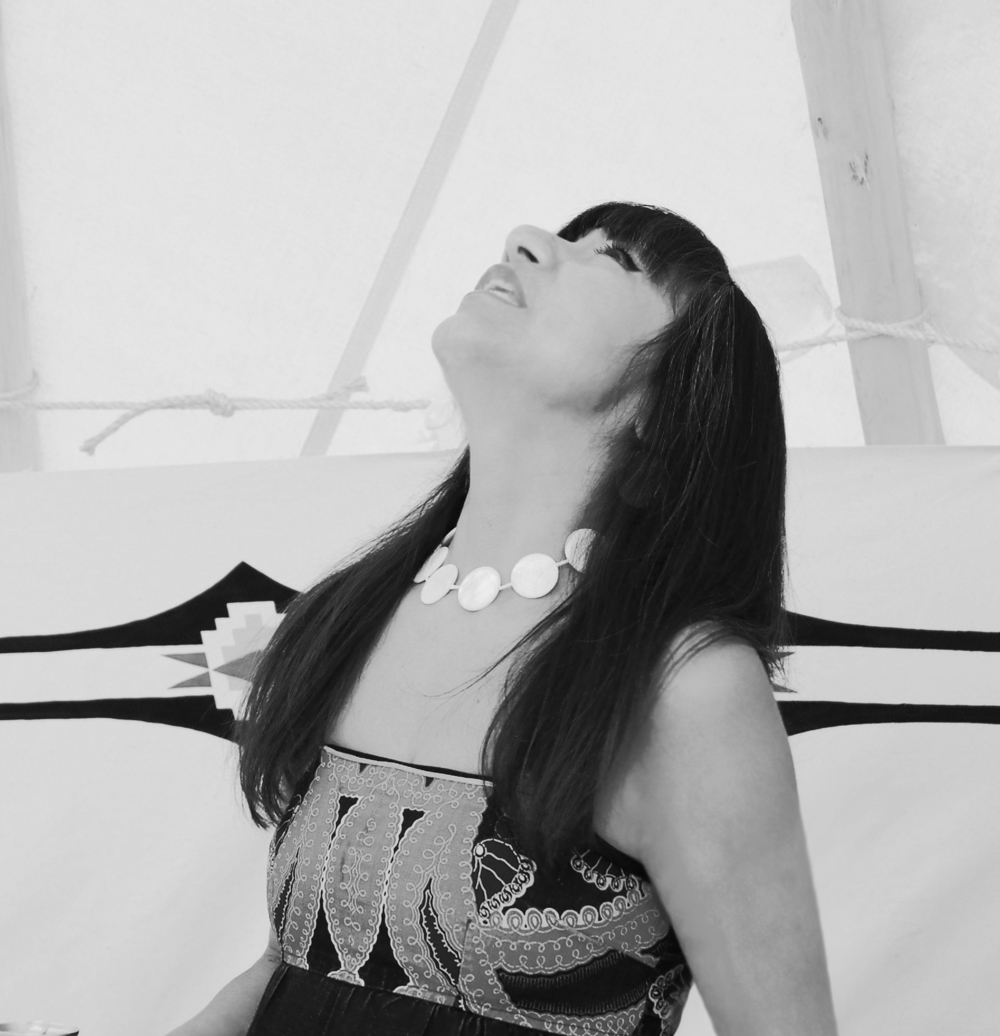
Lorraine "Looking Up, Not Down"

Writing about creative work links to what happens in a person's day. Since my last post, inspiring things have occurred such as my recent presentation of terrific singer Nicolas Bearde, acquisition of a special guitar helping me to raise the bar on my technical playing, and arrival of 72" width cotton/archival paper allowing my wings to spread more as I draw. Since my last post, we have also become aware of troubling events. By now we are very familiar with the name Trayvon Martin, a very young American Black male shot to death. Within the context of a country long since in conflict with its own reflection in the national mirror, it's even more disturbing and discouraging. For many, Trayvon's death hovers in our thoughts because it's not a new occurrence and we know it can easily happen to any of us, our children, family, and friends. Over the decades I've wondered how long it will take for our country to develop beyond its puberty stage (i.e. common identity conflicts: "I wish I were someone else, I hate my hair, I don't like my body, my family is weird") and finally accept what this country has always been, culturally diverse. Cultures are assets not a "condition" to correct.

Since issues of American identity are complex, long standing, and pervasive, the idea of "answers" or responses is daunting. Even to approach the subject, there are stages to be met and faced as individuals and as a group, in this case as a whole country. Recovering alcoholics know, there has to be a shift forcing an individual to "admit" there's a problem, own it, then commit to stages toward a healthier existence that are lifelong and an ongoing daily navigation. Racism/sexism is an orientation we've all been exposed to, like airborne infections. As children, we did not choose to be exposed, but we all were in one form or another. "Treatment" can only begin with acceptance that an "illness" exists and that none of us is outside the circle of exposure. As a country we're still having difficulty admitting a problem exists. So, given all this, it's no wonder the brain can seize up as it considers what actions, big or small, to take that can have any meaningful affect.

What seems to be true throughout history is how powerful creative/artistic work can be in helping to realign away from fear and loathing, toward more positive aspects of our human capacity. Because creative artists respond from more than the brain center, artistic work can break the spell of "looking down," instead experiencing creative work can lift our line of sight and our spirit. I imagine it as an "alignment" that's regularly required in order to feel and see more clearly. "Joy brings miracles," a line in my recent song More Than One Way To Get Home, makes this point. Here's the link in case you want to revisit it with these thoughts in mind: www.youtube.com/watch?v=sWQuvSgGjsU

So, as I write about Nicolas Bearde, my guitar, or my drawing, you are also aware of what's been hovering in my mind and heart. As you know by now, for me, life and art are not separate functions.

Nicolas Bearde, Singer/Songwriter
About Nicolas Bearde, I very recently had the pleasure of presenting presenting him. He's a vocalist and songwriter I've admired for sometime. A founding and current member of Bobby McFerrin's Voicestra vocal ensemble, Nicolas Bearde is recognized internationally as an adept and fearless improviser. I enjoy the fearless aspect of his singing. A jazz recording artist, Nicolas combines jazz, pop, rhythm and blues. A primary member of the McFerrin acapella group, he has also created a notable solo career. Much can be said about him, but what is evident when he sings is that he is doing exactly what he loves and there's such power in it.


Concert Introduction, Lorraine
During his warm up and sound check, Nic asked, "Do you think I'll need a mic?" I'd been upstairs during his vocal check but could hear him well and said, "Hey, your voice fills the room just fine. Don't think you'll need a mic at all." How fortunate Nic is to have a voice that carries like it does. Even with William Beatty's electric piano going and the full sound of Aaron Germain's acoustic bass, his baritone voice still takes center position in more ways than just volume. He's been singing a long time and has a relationship with his voice that he can count on. As we watched and listened to him during his performance, he seemed to do so from a place informed by many experiences, life experiences. That came through and sailed in our direction riding on notes, phrasing, expression that snagged us and triggered connection to our own individual histories. I also love it when other established and seasoned musicians choose to be present and whose attention is held by a performance. At one point well known bass player Jim Kerwin leaned over to me and shared, "He's really a stand up guy and quite the musician." I couldn't have agreed more.


Nicolas Bearde, Lorraine, Aaron Germain, William Beatty
Musicians as Nicolas Bearde also surround themselves with equally impressive colleagues. William Beatty, on keys made that clear. For five years, William honed his skill as a member of a group led by Jules Broussard and also toured throughout the U.S and Europe with band Indigo Swing. He met Nicolas Bearde when working a popular San Francisco night spot. Also a composer, his work is captured in a CD entitled, Songs of Unconditional Love. Since the early 60's I've embraced the concept of unconditional love.

First Set: William Beatty, Aaron Germain, Nicolas Bearde
Bass player Aaron Germain, a Massachusetts native, cut his teeth playing jazz, blues, funk, reggae, Senegalese mbalax then entered the world of Afro-Cuban, Brazilian forro, and other Latin music forms. He'd performed with artists as Yusef Lateef, Stanley Jordon, Andy Narell, John Handy, Mary Wilson, Melba Moore and others. In bass player style, he released music drawing from his broad musical palette, pulling you into a vibration he articulated with such effortless mastery. Days after the concert, Aaron mailed me his CD entitled, Before You Go. I haven't told him yet, but I listened to it as I began cooking the day it arrived. When I cook, it's quiet and I can concentrate. I expected to just hear a few cuts, but with it's opening, he had my attention. What I heard, cut after beguiling cut, was complex, sophisticated, dynamic, nuanced, purposeful, and masterful down-the-center jazz. I was very impressed. We'll probably have a conversation soon about having him back to play some of this work. This is one aspect of presenting I enjoy. Great musicians bring great musicians that open up additional possibilities.
 
Intermission is always a pleasure. Guests enjoy the figure food, each other, and have a chance to connect with musicians performing and those in attendance. Here are some photos I took to share.

Fun and diverse group in conversation
Love that at each performance there are at least one third in attendance who are new to my concert series and others that have returned because they enjoy the genre of music occurring that night. Nicolas Bearde drew an eclectic group of young adults, seasoned jazz supporters, and those interested in the funk end of the musical spectrum.

Ani and Cynthia
Here, Cynthia Bates and Ani Boursalian shoot a smile during intermission. Even though Cynthia is a San Francisco resident, we met in Arizona while there working on a cultural project. Glad that we remain in touch. This is Ani and Cynthia's first time to this concert series. Looks like they'll be back.
 
All the rooms are full and buzzing with conversation during intermission. Concerts have allowed me to introduce musicians to folks that haven't heard them, fans to support them, friends to see each other, and for people attending to meet each other for the first time. Love that combination and the entire dynamic of a concert evening. People keep coming back and new folks make a point to be there, so it seems the whole package works. I never tire of all the smiling going on.

Noam and Nicolas

Photo on left: Jim Kerwin, master bass player in attendance, chats with William Beatty during intermission. They look relaxed and enjoying the moment.

Dinorah, Nancy, Emilio
Also a really nice surprise to see long term friends and colleagues Dinorah Salazar and Nancy Obregon. Here they meet and connect with equally interesting cultural worker, Emilio Banuelos, founder of Black Boots Ink an international online photography site. He and his wife Elena arrived early to help me set up and welcome people at the door.

After a leisurely intermission, the lights flick on and off noting that it's time for the second set to begin. As everyone files toward the downstairs door, Nic and the band begin working their instruments in preparation. The entire set is generous on many levels. I find that musicians connect with the audience in this venue and give so much of themselves in terms of set length and their performance. Those present know it and feel a close connection because the musicians are right in front of them and it's more personal than they'd normally experience. Also a vocal educator, Nic finds moments in the set to encourage audience vocal support of a song or two. People love an excuse to sing and this warmed up crowd was no exception.

Nicolas begins 2nd set/Aaron Germain in rear/photo: Lorraine García-Nakata
Here is a link to a very informal video I shot of a song I very much enjoy hearing Nicolas sing entitled, Wild Is The Wind. Even though it's a rough hand held video capture, it gives you an idea of the warm full quality of his voice and how it fills the room without a mic. Aaron Germain's bass solo was an added plus. Check it out: http://www.youtube.com/watch?v=j-UmxGprKRA

During intermission, Nicolas and I spoke. He mentioned that he'd be interested in conducting a vocal workshop if I was up to hosting it. I've taken his vocal workshops before and they are so inspiring and terrific in terms of vocal technique. Several others overheard and so we moved forward on this endeavor. It's scheduled for Saturday, April 21st, from noon to 4:00 p.m. If you are interested in having more information on this workshop, shoot me an email note and include your email address so that I can send the invite. I'd been in conversation with several musicians about beginning a workshop series, so it appears that the Nicolas Bearde vocal workshop is my inaugural 2012 Master Artist Series. Love the way things unfold when it's time.

It can be tempting to consider presenting this series in a larger venue for many reasons, but what I've found over the years is that this small venue model works on many levels. I've presented in big professional venues and know how to get it done, but I also know the overhead and logistics required to make it successful. For me, this smaller venue keeps it pleasurable, makes room for quicker decision as to which musicians to present, and affords a unique experience for those attending that prefer hearing terrific groups in an intimate setting. For now, I'll stick to what works. It seems to reconcile with guests and performers because musicians are introduced and supported, guests experience wonderful talent, and all present find a few hours to pause all the worries, stress, and pressures.

I hope it wasn't too much beginning this post with what has hovered heavy in my mind. It's hard to scribe things about my creative work and activity without also sharing some elements of what drives the work. It also has much to do with why I've always enjoyed presenting other talented artists. At these intimate concerts, people of various ages, genders, persuasions, and cultures come together to simply enjoy the moments. It seems a simple thing, but in the scheme of all that goofy stuff going on out in the public arena, it's something I enjoy and it makes sense. It's a small act I believe helps shift the axis toward a healthier human condition––a creative attitude alignment and spirit lift. We need lots of them.

Today, I started drawing a piece as a gift to my son, Kanichi, who turns twenty-one this week. So, I'm up on a ladder, pushing that charcoal and pastel around on a large sheet of 100% cotton rag archival paper. I'm also enjoying playing my recently acquired Martin OM guitar. I can share more about that later. There's so much to do when moving between music, writing, and drawing, but I'm the happiest I've been for a very long while.

I'll leave you with that for now. My best to you,

Lorraine

Thank you Emilio and Elena Banuelos for your help on the concert!!!


blog: lorrainegarcianakata.blogspot.com
web site: http://lorrainegn.com/

Copyright ©2010 Lorraine García-Nakata protected under U.S. and International Law. No part of this site maybe reproduced, stored in or introduced into a retrieval system, or transmitted, in any form, or by any means (electronic, mechanical, photocopying, recording, or otherwise), without prior written permission of the copyright owner and artist, Lorraine García-Nakata/Lorraine García. This includes all rights now in existence or which may hereafter come into existence, including but not limited to authorship, documentation, lectures, or any other creation or presentation by Lorraine García-Nakata/Lorraine García in any artistic medium, print, audio, electronic, video, CD ROM, photographic, digital, film, and any other medium.


Monday, March 19, 2012

Expecting To Fly-9

Lorraine García-Nakata playing guitar

Today, the wind blows firm over the San Francisco terrain as I write from a favorite nook that looks out over public trams and people migrating on foot zipping up coats and flipping up collars. We’ve had four inches of rain that spilled long and even over the last five days. 

The rainy week gave me time indoors to focus and complete a music task. I’d been fooling with a guitar line for a long while, just waiting for a lyric that felt right. Once the nouns and verbs pushed forward, it only took about twenty minutes to layout the story. Lyric usually comes more quickly once I land the guitar music, but this particular tale had its own timeline. I realize now there were some events I had to experience first.

As an artist that navigates between three artistic disciplines, there are other creative outlets to keep my attention until a lyric or music line decides to appear. Finally the lyric arrived, so I worked together the vocal and guitar soon after calling Lee Parvin at his recording studio, “I think I have a couple tunes I’d like to nab before that ‘first love’ moment passes.” He laughed because he knows exactly what that moment is and why laying a track within that initial lust period is a good idea. It’s similar to the period when you first meet a love interest, your excitement level elevates and you’re feeling that part of your brain smoothing out life’s wrinkles. It’s a thrill and a new song can also work that part of you. As writer and performer, Lee knows about how fleeting that window of time can be to capture it in a recording. “Work it up, get it ready, but just don’t play the song too much before we record so we can catch that wave while it's still feeling really live.”

I’m around seasoned musicians, both as close friends and because I also present them. As I reignite my music life, it’s set against a backdrop of terrific musicians who have lived and breathed their work for decades. So, working to avoid feeling inadequate is an expected challenge. I negotiate that territory and developed a way to keep myself from getting in my own way. Getting in one's own way happens when an internal critical sergeant starts up in the head. To offset all that, I do something similar to “pretending.” It‘s a mind game. I tell myself that I am already what I am working to become. It works better at times more than others, but it's a way to relax enough to deliver what you already have the capacity to do, instead of choking.

So this last week, on a rainy afternoon, I drove down Highway 1 to Pacifica, California to Lee's studio. Guitar in hand, I begin to roll the pretend thing in mind. Lee directs me to my seat, plugs me in, gets my headset working, wires me for sound, and works the settings right for my voice and guitar while I work to keep that strip of confidence front and center. From the booth and into my headset, Lee says, “We’re rolling.” And in that second of silent live space before you start, I pull it in, focus, and begin.  During this “live” period of recording time I’m able to keep one foot in “pretend” territory while the other lifts slightly off the ground but doesn't commit to the insecurity pad. I’ll be glad when I put in more time so that I can count on a level of confidence that I have in arenas of visual arts and writing.

I'm all geared up for sound. During a pause, Lee's granddaughter pops in.


One of the songs I recorded was my own and titled, More Than One Way To Get Home. The other is a 1966 cover song written by the late Fred Neil. I have always loved his material and voice.

Working up the songs and recording them was it’s own right of passage, but in order to include the recordings in this blog to share with you, I had to create a URL. That meant working with imovie and finding an appropriate still photo. That fried a few brain cells. Once creating my YouTube account the songs were uploaded. Until that moment, I'd been focused on meeting challenges of finishing, arranging, preparing, and recording the songs, but then it hit me they were now out there and public. I had a moment of silent, middle-of-the-night panic. My stuff was out there, but I wasn’t sure how I felt about it.

Photo of me in NY, Times Square I worked up to accompany YouTube posting of song I wrote,
More Than One Way To Get Home

I’ll share a little about my tune More Than One Way To Get Home. Several things seeded the lyric, but as with my other writing, I let it sail out without over thinking. Later reviewing the lyric, the theme became more apparent. In this life you have choices and you may even have a general road you want to travel. We often get in our own way of pursuing our passions. It’s not unusual that we give up before we really start because of a whole host of fears. As humans we regularly default to fear instead of heading toward things that make us joyful. That list of fears is long, yet the list of things giving us joy is much shorter. Why is that? Words like being “responsible” are socially acceptable words often used to describe giving up on a dream. We are oriented to default toward fear in this business of living and it’s good to be aware that we are constantly in recovery from that lens. In my case, even though later in life, I decided to hop back on the passion bus and I'm glad I did.

Lee Parvin and I have discussed many times how it’s not only responsible for an artist to create, it’s a duty. Art has the ability to create joy, which I see as energy that lifts rather than pulls down. Physics, philosophy, Indigenous understanding, and some less dogmatic religious perspectives have helped me to understand the interdependent relationship between actions of a single entity on that of a larger system. In other words, creative work has the power to shift things. As I shared with Lee, "The 'universe' is counting on us to follow our passions, and to not follow it, is irresponsible."

I sing, write, create work with my hands and it opens me up to unexpected territory. It’s like the event horizon of a black hole, a place at the opening of the vortex where gravity is pulling in and out at the same force causing something to hover for a bit, neither in nor out. I always loved the idea of that. I once read that the event horizon is where dynamic life and creativity can linger and give birth. It's another way to describe the place creative/improvisational artists step into.

More Than One Way To Get Home also shares that you can take a direct or “scenic” route toward your passion. I mention baking because I also love inventing/creating meals to share. So, I didn’t sit down and try to mesh all this together in a song. Instead, I had feelings/thoughts that hovered and they injected themselves in the lyric. I'd also been looking out at all that goofy stuff going on out in the public arena and re-visited writings including Shakespeare’s Mercy Speech and thoughts by Leon Foucault (1819-1868) and historian/philosopher Michael Foucault (1926-1984). All of this insinuated itself into my song.

My goal in birthing More Than One Way To Get Home was to finish a musical line I’d been having fun playing, give it life, and possibly cause the listener to spark a smile. Here’s the link to this new tune. I hope it suits you. http://www.youtube.com/watch?v=sWQuvSgGjsU

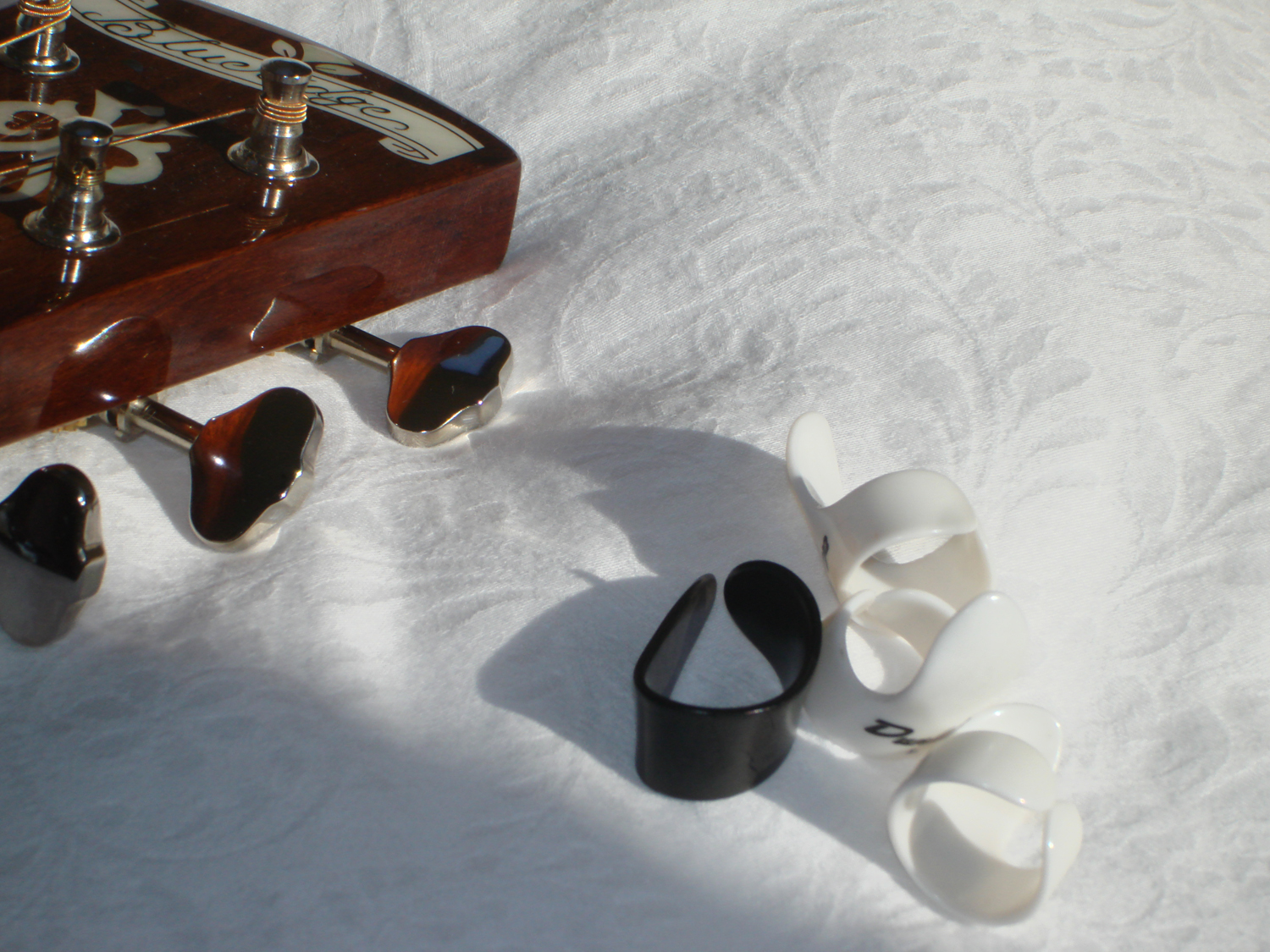
One of my guitars and finger picks I use for recording
Steve Green was my performing partner in 1965 and gave me my first finger picks. A terrific guitar player, master picker, he could play any style and vocally we married well. He was about five years older than me and drove around in his yellow Fiat wearing black rimmed glasses that are in vogue again. We sang together when I was barely in my teens, traveling to the Bay Area from my home in the Central Valley.

During that period, I was fearless with my voice and could do most anything with it. I trained for an hour every Monday through Friday morning with instructor Richard Hull. A jazz musician, he was a stickler and I really appreciated that he cared so much, enough to get really earnest and sometimes shout. He shared once that he'd get excited because, "we were so close" to nailing something difficult. Also, being perfectly in tune wasn't optional. The result was my ability to have a broad vocal range, develop an appreciation for dissonance, incredible breath support, sparing use of virbrato, becoming one voice with other singers, expanding and contracting emotion, and moving from a cresendo into the power of pianissimo then suspending a note for a very long time giving it life till the end. When Steve and I'd sing, I loved finding the right moment to let a note hover at length this way at the close of a song, stunning folks into silence before a burst of applause. You get the picture, I was fearless because of what my voice could do. So, decades later, I'm getting to know a new voice, its assets and limitations, and music that suits me at this point in my life. It's like getting reacquainted with a long lost best friend from childhood. Tough at first, but since I wasn't successful in ignoring this passion, I'm doing the hard work again and taking a risk of sharing it with you.

1968: Me/white shirt, Steve Green/white shirt, sister/Eva, my partner Craig Hinkley/hat and friends

One day Steve noticed that when he'd play his guitar my fingers would automatically move, tapping a surface to his picking tempo. He showed up one day with metal finger picks that he placed on my fingers and told me to pick while he changed chords. Smiling he said, "You're a natural picker and should start playing." So, not long after I ended up with a guitar that he handed me and I began learning to play songs like Dylan's Blowin' In The Wind, Donovan's We Stood In A Windy City, and others with simple cords. I never played when we performed but I'd play for hours on my own toughening up the tips of fingers that hold down the strings. It hurt a lot at first but I was so excited about playing and getting better that I just kept going despite the pain. What I still like about picking with my right hand and hammering with my left, is that it allows you to expand or contract the emotion of a song even more. It also makes simple cords sound more complex. I have very small hands, so keeping cords simple or playing in open tunings helps me, especially since I sing and play at the same time. When I turned twenty one years of age and was living-on-the-land in the Pacific Northwest mountains, a friend of mine named Ed Rapp had a special pair of picks hand cast and fashioned out of solid sterling silver. They each have micro sized imprints of an eagle and are still one of my treasures. They're my dress up picks.

YouTube image I selected to accompany song, Faretheewell

The second song I recorded at Lee Pavin's studio is Faretheewell, a 1966 piece by Fred Neil. He is a writer and singer I have admired over the years. Born on July 7, 1936 and leaving us on March 16, 2001, he released three albums in the 1960's yet shunned anything relating to fame and celebrity. He preferred playing privately for friends and refused requests for interviews. Singers of the New York scene during that period, such as Dylan, Simon and Garfunkel, and many many others, speak of his influence on them. Positioned to have all the fame others would know, Fred was a recluse. For me, his songs were often haunting, simple genius, and drew emotion. His unusual voice range, especially his lower register, snagged my senses even more. It also made his songs a challenge to sing. The first time I heard Faretheewell, I was hooked. I'd always wanted to sing this song, but it wasn't until recently that I worked out an arrangement that I could play in the style I know and in a key allowing me to approach and sing this beguiling song. I certainly enjoy singing it and hope I did it some justice. Here is the link if you're interested: http://www.youtube.com/watch?v=err3qaBjqy8
 
In previous blog posts I've been chattering on about the three artistic disciplines I hope to continue to navigate. I can't seem to let any of them go. They are family and part of who I am and also becoming. I knew I'd eventually have to take the risk of sharing with you the progress I'm making in a discipline I dropped for over thirty years, then decided to reengage again. I did beat myself up for a long, long time about calling a halt to making music but have come to realize we do what we do in our own time, and that time is the correct time for each of us. Buddah helped me with that. So, I now take the risk of making bare this musical part of my life, the joy it brings and all its imperfection. Also, as I write this, I'm smiling at the non-intended parallel between the song Faretheewell, that speaks of flying, and my blog title and metaphor for living to the fullest, Expecting To Fly. Do what you came in this life to do. I'm certainly trying.

My hand cast sterling silver picks, gift from Ed Rapp in 1971

I'll leave you with that for now.
My best to you,

Lorraine

blog: lorrainegarcianakata.blogspot.com
web site: http://lorrainegn.com/

Copyright ©2010 Lorraine García-Nakata protected under U.S. and International Law. No part of this site maybe reproduced, stored in or introduced into a retrieval system, or transmitted, in any form, or by any means (electronic, mechanical, photocopying, recording, or otherwise), without prior written permission of the copyright owner and artist, Lorraine García-Nakata/Lorraine García. This includes all rights now in existence or which may hereafter come into existence, including but not limited to authorship, documentation, lectures, or any other creation or presentation by Lorraine García-Nakata/Lorraine García in any artistic medium, print, audio, electronic, video, CD ROM, photographic, digital, film, and any other medium.

Friday, March 2, 2012

Expecting To Fly 8

 Artist:  Lorraine García-Nakata
Detail of larger self portrait drawing (alter ego"Lucy")


As with drawing sketches,  "sketches" in written form also require letting go. The more you let the words come forward without too much thinking, the more you'll trust the process. The more you trust the process, the more you'll see what ends up on the page is not stupid stuff. Letting go leaves room to really hear yourself instead of being intimidated by, what I refer to as, your self-critical "sergeant." That sergeant doesn't leave very easily, so I just tell her to take seat at the bench and let other parts of me have a turn. Knowing I'm not asking her to leave altogether, she begrudgingly takes a time out. These days my "sergeant" doesn't have to be asked to leave when I write. She does it automatically because she knows there are so many other hours in the day to nag me.

When I write, I call on more than my brain to drive the words, phrases, and thoughts that step forward. Again, I sit, wait, and the process begins. Like meditating, you're both conscious and unconscious at the same time. What I mean is, you relax the brain and let other parts of your body, your history, your future, your present, help pick the nouns and verbs.

I have a general idea of a writing format as I begin whether it's a short story or chapter of a larger work. In 2006, I initiated another format that I coined as my Children's Stories For Adults. It is also the title of this collection of writings. Scribed with adults in mind, these written sketches mirror a children's book format and the honest simplicity of their speech. The approach utilizes very basic vocabulary, repetition, short sentences, and simple punctuation. Also, the entire arch of an adult tale is laid out in a very limited number of words. Getting to the point with less, is key. At first, writing this way was an exercise yet I began to enjoy what came forward because it was revealing and often very accurate.

On December 18, 2006, I wrote the first of these tales. This initial one was about a fellow writer named Tony Long. "Lucy,"my alter ego, represents the person I was at about ten years of age. A tomboy, she is direct, authentic, and doesn't mince words. Tony and I would kid about her. When he'd ask me a tricky question, I'd reply, "So, do you want Lucy to answer or another?" He liked Lucy, so he'd get a straight-down-the-middle answer. I read the following piece to him over the phone. He said that I'd "definitely nailed him." I thought so too.

Here it is:

My name is Tony.
I write in the morning.
I write at night.
Words are not always my friend.
Sometimes words hide from me.
Sometimes words fill my head and I can’t sleep.

On warm days, I write about cold lemonade.
When it is cold, I write about hot soup.
I live in a neighborhood I hardly ever leave.
I need to get out more.

I met Lucy.
Lucy lives in my town, but not in my neighborhood.
Lucy writes and I like to read it.
Her stories make me smile.
Her stories make me wonder about other places.

Lucy likes it when we sit together quiet.
Lucy likes to hear me laugh.
Lucy makes me want to know more about her.
Lucy likes science, music, and dancing.
Lucy makes friends easy.
Lucy said she likes me.
It scared me and I don’t know why.

I write in the morning.
I write at night.
I write near windows.
I write at work.
I write and write.
It is what I do.
I write and write.
It is what I do.
I write and write in my neighborhood.
I really need to get out more.
I wonder what Lucy is doing?  

©2006 Lorraine García-Nakata

Usually I write three or four of my Children's Stories For Adults in one sitting. In this way, written "sketches" share a similar pattern as drawing sketches. In both, the element of surprise is fun. I wrote about my son and daughter. When I read these word "sketches" to them, they chuckled and felt I'd captured them. Sometime in either 2009 or 2010, I was invited to be interviewed as part to the national Storycorps program. I wanted to have my son Kanichi and daughter Monica, included. During the interview, I read the pieces I share with you below. It was fun to hear their comment and have it captured.

From the time my son Kanichi was two years old, he showed interest in both science and music. I like to read about physics and one day as I was reading about black and white holes. Two-year-old Kanichi begged me to read to him out loud about these vortexes. So I did. Between three and five years of age, he was almost obsessive about anything that formed a funnel, such as tornadoes, hurricanes, water going down the drain, and of course black and white holes. Earlier, when he was three months old, he liked the piano and would get very excited when I'd hold him on my lap so he could play the piano keys. I was glad to see he had a special attraction to music. Kanichi also retains information in a way most humans can't. So with all this in mind, I wrote the following "sketch" about him on December 18, 2006. Again note the repetition, as is needed for children's books, as well as the short sentences with simple vocabulary.


My name is Nichi.
My real name is Kanichi.
I live in a city that does not get hot.
I don’t like hot weather.

I like to know how things work.
I watch water go down the drain.
I watch clouds make shapes.
I like volcanoes.
I like tornadoes.
I know what to do when earthquakes shake my house.
I leave notes for everyone about the frost.

My friends ask me about the weather.
I sometimes know.
I like history.
I like to read about the Middle Ages.
Back then people were scared about what they did not know.
People get scared now about what they do not know.

I like music.
I can hear notes.
I play the piano.
I play the clarinet.
I play the saxophone.
I am learning to play guitar.
I like to write music.

I sleep well at night.
I like to sleep long, because my brain works hard.
I like to know how things work.

©2006 Lorraine García-Nakata

There are different ways writers scribe. Some prefer pen to paper. I feel the most freedom when all ten of my fingers are participating on computer keys. Maybe that's because I'm calling on more than the brain to create.

I wrote a piece about my daughter Monica the same evening that I wrote about my son Kanichi. From a very young age, Monica had poise and navigated with people very easily. Her name literally means, "an adviser," which is true to her nature. As a two-and-a-half-year-old child, I observed her in an outdoor day care play area. It was her first time with this new group of kids. In the center of the play area sat a small house structure with windows and small table with chairs inside. Walking out onto the play area, Monica entered the little house, climbed up on the table so she could look out the little rear window opening. What she did next told me a great deal about her inclinations. Leaning out she asked without hesitation, "Does anyone want to talk?" Two little boys, who'd been running about, stopped in their tracks obviously taken by the question. Curious, they entered the little house structure, found a seat, then proceeded to sit and chat with Monica for some time. I knew then that she would do well at this day care, and more importantly, I became aware that she would be good at getting others to take important time to stop, open up, and consider things. This is an important aspect of what she now does for a living. 

As a young child, Monica revealed many things to me. In her teens, she expressed her love of the Spanish language. I payed attention to what Kanichi and Monica both revealed to me about themselves and their interests. At one point, I felt that in their lifetime, they would be called on to do something together that would be important and needed. I have shared this with them on several occasions. With all this in mind, I wrote the following piece about my daughter Monica, which also references her younger brother, Kanichi:

My name is Monica.
I live in a city.
The city is what I know.
I like to be with people.
I like the quiet.

I listen to people.
They listen to what I have to say.
They think I can help.
I am not always so sure.
I listen to people.

I speak two languages.
It is my favorite thing to know.
If I don’t practice the words.
They start to disappear.
That makes me sad.
When I speak two languages,
There is more room in my heart.
When I speak two languages,
It makes me happy.

I have a little brother.
I like him more now that he is older.
My little brother has a good brain.
He learns things fast.
He learns to play music.
He wants to learn two languages.

When my brother and I are older,
My brother will help me.
When my brother and I are older,
I will help my brother.
We will do something together,
To help other people.
This is what our mother sees.
We will speak two languages.
We will have happy hearts.

©2006 Lorraine García-Nakata

Capturing people in written form is a challenge. Writing a piece about yourself can be difficult, especially when being very economic with words.  It requires letting go for sure and not over thinking.

The written sketch about me again references my alter ego "Lucy" who is depicted, below, in my large drawing. There is a reason Lucy is important to me at this later juncture in my life. Calling her forward these days gives me permission to not mediate for others so much, to let others know what I'm thinking and what I need, and to have more fun. I also mention Wayne Williams in the written sketch below. He was my best friend during this period. Wayne moved away and I didn't see him again. We shared a lot of time together making potentially boring days, very interesting.

 Artist: Lorraine García-Nakata
Self portrait drawing (alter ego"Lucy"), 7' x 41/2'
I wrote several self portrait sketches. This first one was written on
December 21, 2009:


Lucy likes to climb.
Lucy sees a tree. She climbs it.
Lucy sees a hill. She climbs it.
Lucy sees a rock. She climbs it.
Lucy likes to see things from up high.
It is quiet up above.
Up above, Lucy is still.
Up above, Lucy is quiet.

On the ground, Lucy is busy.
Lucy runs.
Lucy catches baseballs.
Lucy studies.
Lucy draws.
Lucy sings.
Lucy laughs.
Lucy makes things happen.

Lucy is not so sure at home.
Lucy’s mother works and works.
Lucy does her homework.
Lucy helps sisters with homework.
Lucy cleans dishes.
Lucy watches Twilight Zone.
Lucy puts bandages on knees.
Lucy breaks up fights.
Lucy wakes up first in the morning.
Lucy flies in her dreams.

Lucy has a best friend named Wayne.
Lucy and Wayne plan adventures.
Lucy and Wayne plan shows.
Lucy and Wayne catch lizards.
Lucy and Wayne build forts.
Lucy and Wayne watch cells in a microscope.
Lucy and Wayne wander over seven levees.
Lucy and Wayne crouch down as a gun shoots overhead.

Lucy coughs today.
Lucy cannot breathe well.
Lucy’s skin has red welts and itches.
Lucy’s doctor says she should go to camp.

©2006 Lorraine García-Nakata

My mother was a nurse, so seeing a doctor was a little easier for us. When I was about ten years old, I had a period when when my stomach hurt. I'd get hives, and once in a while my airway would clamp up. One symptom would lead to the other. Luckily that ensemble didn't continue to plague me indefinitely. Mom took me to see the doctor. After his examination, he pulled my mother aside to ask her a few questions about my home life. He prescribed some medicine for immediate relief, but also pushed her to send me to camp. People just didn't go camping in our neighborhood. Time, money, and equipment were needed for that. Also, I didn't understand why I was going to camp. I was too young to know the doctor really meant that I needed to get away.


 Artist:  Lorraine García-Nakata
Detail of larger self portrait drawing (alter ego"Lucy")10 years of age
Anyway, I found myself at Bear Valley Camp which was a distance from my Central Valley home. I had a borrowed sleeping bag, my clothes, tooth brush, comb, and few other essentials. I was used to being out roaming orchards, river bottoms, railroad tracks, climbing up trees, and generally exploring, so camping wasn't a huge adjustment. It was just more structured and having three meals a day was something new. Here is a written sketch about that two week get-a-way:


Lucy is at Bear Valley.
Lucy does not know why she is here.
Lucy stands in line with a sleeping bag.
Lucy will be at camp for fourteen days.
Lucy signs up for archery.
Lucy signs up for hiking.
Lucy is in a tent with kids she does not know.

Lucy uses a flashlight.
Lucy uses bug spray.
Lucy must sing prayers before she eats.
Lucy sings, “Come to the church in the wildwood.”
Lucy hikes.
Lucy steps around cow poop.
Lucy likes shooting arrows.
Lucy sits near a fire.
Lucy feels at home.

Camp teachers see Lucy as a kid.
Teachers show Lucy an inchworm.
The worm stretches and lifts.
Teachers wait.
Lucy thinks.
Lucy says, “Oh, my goodness.”
Teachers say, “Did you hear her say ‘Oh, my goodness’?”
Lucy and the inchworm roll their eyes.

Lucy has camp friends.
One friend is Allie.
At home, Allie lives in a very big house.
Allie is sometimes sad.
Lucy makes Allie laugh.
Allie comes to camp each summer.
Allie must stay thirty days.
Lucy leaves camp.
Allie must stay thirty days.

A car brings Lucy home.
Lucy walks inside the house.
Lucy’s family sits on the couch.
The family looks the same.
The family looks different.
Lucy feels different.                         

©2006 Lorraine García-Nakata

I'll close with one last sketch of a friend of mine, Jim Kerwin, who is well known for his terrific playing on his upright bass. We had the occasion to hang out a lot in 2010 and during that period I wrote the following piece that describes him in this short writing format. When I read it to him, he tilted his head back, lifted his brow, and smiled. It was scribed on August 25th, 2010. Again, writing about someone else is easier than writing about yourself.

My name is Jim.
I play notes.
I stand and play notes.
My fingers pull big strings.
My fingers move up the strings.
My fingers move down the strings.
My brain smiles when I play.

I see Lucy.
Lucy hears my notes.
I see Lucy.
Lucy only hears my notes.
I see Lucy.
Lucy sees me.
Lucy sees me in spaces between the notes.
My notes and spaces make her brain smile.

My name is Jim.
My face pinches when I play notes.
I stand and play notes when I worry.
I stand and play notes when I am glad.
I stand and play notes when I imagine.
I dream in spaces between notes.
Lucy sees in the spaces between my notes.
My notes and spaces make Lucy smile.

©2010 Lorraine García-Nakata

In outlining this abbreviated writing format, I realize I've shared a lot about myself, probably more than intended. Yet, that is both the strength and reward that comes with sitting down, clearing the head, and letting the writing carry you, rather than holding back or over controlling the nouns and verbs. That's not as interesting to me. I like the element of surprise that comes with relaxing, trusting yourself, and letting go. So, you might want to try writing a quick sketch about any subject that suits you.
You might enjoy it.

Best to you, from me!

YouTube (music): http://www.youtube.com/watch?v=sWQuvSgGjsU
blog: lorrainegarcianakata.blogspot.com
web site: http://lorrainegn.com/

Copyright ©2010 Lorraine García-Nakata protected under U.S. and International Law. No part of this site maybe reproduced, stored in or introduced into a retrieval system, or transmitted, in any form, or by any means (electronic, mechanical, photocopying, recording, or otherwise), without prior written permission of the copyright owner and artist, Lorraine García-Nakata/Lorraine García. This includes all rights now in existence or which may hereafter come into existence, including but not limited to authorship, documentation, lectures, or any other creation or presentation by Lorraine García-Nakata/Lorraine García in any artistic medium, print, audio, electronic, video, CD ROM, photographic, digital, film, and any other medium.